
You are the salt of the earth”: International Catholic Bishops Call for Justice and an End to Occupation in the Holy Land
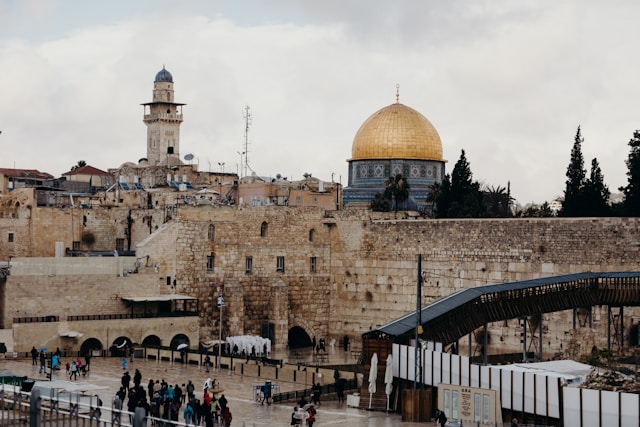
Following a week-long pastoral visit to Israel and Palestine, the bishops of the Holy Land Coordination have released their final communiqué, calling for an immediate end to the Israeli military occupation of the West Bank and urging the international community to revive meaningful negotiations toward a two-state solution. The statement, titled “You are the salt of the earth; you are the light of the world,” highlights the catastrophic humanitarian crisis in Gaza and the “relentless” system of occupation in the West Bank that threatens human dignity of all who live there.
The Holy Land Co-ordination is an annual pastoral and ecclesial meeting of bishops from Europe and North America, rooted in prayer, reflection, advocacy, and attentive listening to the Christian communities and peoples of the Holy Land.
The delegation, which included Most Rev. William Nolan, President of Justice & Peace Scotland and Archbishop of Glasgow, spent five days “listening at the margins” through encounters with Bedouin communities, Christian villages under pressure, and Palestinian and Israeli peace activists. Their journey began with visits to Bedouin communities in the West Bank where they witnessed firsthand the intimidation and property destruction caused by extremist settler violence. The itinerary also included a visit to Taybeh, the only completely Christian town in Palestine, where residents described a campaign of land seizure, settlement expansion, and attacks on olive trees, a significant source of livelihood, which is driving mass emigration of residents.
Archbishop Nolan shared his reflections on the current situation there following these encounters and from further meetings with figures such as Cardinal Pierbattista Pizzaballa, Latin Patriarch of Jerusalem, and a video dialogue with Fr. Gabriel Romanelli, the parish priest of Holy Family Catholic Church in Gaza. He described a land scarred by conflict but held together by a fragile hope:
“We come to a country which is traumatised… All sides, whether it’s the Israeli side or the Palestinian side, have been traumatised by years of conflict, and even more so by the atrocities of the 7th of October attacks and then by the Gaza war. It’s very difficult for people, when they’re suffering themselves, to see the pain of the other side.
“This land is for everyone who lives here and that has to be accepted by all sides.
“[In the West Bank], we went to visit some Bedouins who are under great pressure… there are Israeli settlers who are causing so much harassment by their violent actions, destroying people’s livelihoods. There’s a campaign to try and disrupt the lives of “Palestinians on their land, to encourage them to go away and to disappear. It seems to be left completely unhindered by the authorities.
“Life here will not improve until the occupation comes to an end. At the heart of the problem is this: the Palestinians live under a military occupation in the West Bank and in Gaza… we do need them to be given a state of their own.
“There are many impressive people here working for justice and peace, and they’re the people that give us hope. Everyone wants peace… if only everyone could realise that the only way to peace is through justice.”
Central to the Bishops’ visit were dialogues with those working for reconciliation and human rights within Israeli and Palestinian society:
- The Rossing Center for Education and Dialogue: A Jerusalem-based interreligious organisation where the bishops discussed the promotion of interreligious and political dialogue among Jews, Christians, and Muslims. The Center works toward fostering a sense of shared identity and mutual understanding, envisioning societies that embrace religious and national diversity as an asset rather than a threat.
- Rabbis for Human Rights: Representing the voice of Jewish tradition in the field of human rights, this non-partisan organization brings together over 170 rabbis and students from all denominations. They are uniquely activist, putting pressure on policymakers to safeguard human rights for all, including Palestinians in the territories, rooted in the conviction that every person is created in the image of God.
- The Parents Circle – Families Forum: The bishops met with this group of Israeli and Palestinian parents who have all lost children to the conflict yet find the strength to advocate together for reconciliation and justice for all peoples. Their inspirational witness offers a powerful reminder that dialogue and forgiveness remains possible even amid immense trauma and profound grief.
The Bishops use the statement to urge global governments to exert pressure on Israel to uphold the “rules-based international order” and to revive meaningful negotiations for a two-state solution. Echoing the call of Cardinal Pierbattista Pizzaballa, the Latin Patriarch of Jerusalem, the delegation also invite the international community to return to the Holy Land on pilgrimage as a tangible sign of support and solidarity.